Showing posts with label history. Show all posts

25 October 2023

Enoch and its Importance in Biblical Scholarship


Enoch is a figure mentioned in the Bible who is said to have walked with God and been taken alive to heaven (Genesis 5:24). He is also mentioned in the New Testament as an example of faith (Hebrews 11:5).

The Book of Enoch is a pseudepigraphical text that was written in the Second Temple period (c. 200 BCE - 100 CE). It is not considered to be canonical Scripture by either Jews or Christians, but it is still important to biblical scholars because it provides insights into the beliefs and practices of early Judaism.

The Book of Enoch is a complex and multifaceted work, but some of its key themes include:

  • The fallen angels: The Book of Enoch tells the story of how a group of angels rebelled against God and were cast down to earth. These angels are known as the Watchers, and they are said to have fathered the Nephilim, a race of giants who terrorized the earth before the flood.
  • The Messiah: The Book of Enoch contains some of the earliest apocalyptic prophecies about the Messiah. The Messiah is depicted as a powerful and righteous figure who will come to defeat evil and establish God's kingdom on earth.
  • The afterlife: The Book of Enoch also provides detailed descriptions of the afterlife. Heaven is depicted as a place of great beauty and peace, while hell is a place of torment and suffering.

The Book of Enoch was highly influential in early Judaism, and it is cited in several New Testament texts, including the Gospel of Jude. It is also thought to have influenced the development of Christian doctrines such as demonology, the resurrection, and the final judgment.

Biblical scholars study the Book of Enoch for a number of reasons. First, it provides insights into the beliefs and practices of early Judaism. Second, it can help us to better understand the New Testament, since it is cited in several New Testament texts. Third, it can help us to better understand the development of Christian doctrines.

Here are some specific examples of the importance of the Book of Enoch in biblical scholarship:

  • The Book of Enoch provides insights into the development of the messianic concept. The Messiah is depicted as a powerful and righteous figure who will come to defeat evil and establish God's kingdom on earth. This concept is similar to the way that the Messiah is depicted in the New Testament.
  • The Book of Enoch also provides insights into the development of Jewish demonology. The Watchers are said to have fallen from heaven and become demons. This concept is similar to the way that demons are depicted in the New Testament.
  • The Book of Enoch also provides insights into the development of the Christian doctrine of the resurrection. The Book of Enoch teaches that the righteous will be resurrected to eternal life, while the wicked will be resurrected to eternal punishment. This concept is similar to the way that the resurrection is depicted in the New Testament.

Overall, the Book of Enoch is an important source of information for biblical scholars. It provides insights into the beliefs and practices of early Judaism, and it can help us to better understand the New Testament and the development of Christian doctrines.

The 39 Articles of the Anglican Church: A Comprehensive Overview


The 39 Articles, often referred to simply as the "Articles," are a foundational document in the Anglican tradition. They represent a statement of faith and doctrine for the Church of England, setting out key theological principles and beliefs. These articles have played a crucial role in defining Anglican identity and doctrine since their inception in the 16th century. In this article, we'll explore the history, content, and significance of the 39 Articles.

**Historical Background:**
The 39 Articles were first formulated during the English Reformation, a period marked by significant religious and political changes in England. In the early 16th century, King Henry VIII separated the Church of England from the Roman Catholic Church, leading to the formation of the Church of England as a distinct entity. However, it wasn't until the reign of Queen Elizabeth I that the Articles were finalized in their present form, in 1571.

**Purpose and Scope:**
The 39 Articles were created to address the theological and doctrinal issues of the day. They sought to establish a distinct identity for the Church of England, distinguishing it from both Roman Catholicism and more radical Protestant groups like the Puritans. The Articles served as a compromise between these different religious factions, allowing for a measure of diversity in belief within the Church.

**Key Doctrinal Points:**
The Articles cover a wide range of theological topics, addressing issues such as the nature of God, the authority of Scripture, the sacraments, and the role of the clergy. Some of the key points within the Articles include:

1. **The Authority of Scripture:** The Articles emphasize the authority of the Bible as the ultimate source of Christian doctrine and teaching.

2. **The Doctrine of the Trinity:** They affirm the belief in the Holy Trinity - the Father, the Son, and the Holy Spirit - as central to Anglican faith.

3. **The Role of Sacraments:** The Articles recognize two sacraments as ordained by Christ: Baptism and the Eucharist (Holy Communion). They affirm that these sacraments are effective signs of God's grace.

4. **Predestination and Salvation:** The Articles discuss the concepts of predestination and the assurance of salvation, acknowledging the mysterious tension between God's sovereignty and human responsibility.

**Adaptability and Interpretation:**
One of the notable features of the 39 Articles is their flexibility. They were intentionally framed to allow a range of interpretations, which has contributed to the diversity within the Anglican Communion. While some Anglicans hold the Articles in high regard and interpret them in a more conservative manner, others see them as historical documents open to reinterpretation in the context of contemporary beliefs.

**Modern Relevance:**
In the 21st century, the 39 Articles remain a foundational document for the Anglican Communion. They continue to influence the theological and doctrinal discussions within the Church, providing a touchstone for Anglican identity and practice.

In conclusion, the 39 Articles of the Anglican Church represent a significant theological document with a rich history and a lasting impact on the Anglican tradition. While they were formulated in a particular historical context, their adaptability and enduring relevance allow them to continue shaping the faith and practice of Anglicans around the world. Whether viewed as a historical artifact or a living statement of faith, the 39 Articles remain a vital part of Anglican identity and theology.

22 October 2023

The book of Enoch's influence on Christianity today


The Book of Enoch is an ancient Jewish religious work attributed to Enoch, the great-grandfather of Noah. While it is not considered part of the biblical canon by most Christian denominations, it has had some influence on Christianity, particularly within certain sects and in terms of its impact on religious thought and imagination. Here are a few ways in which the Book of Enoch has influenced Christianity:

1. Early Christian Literature: The Book of Enoch is referenced in some early Christian writings, including the Epistle of Jude in the New Testament. Jude quotes directly from the Book of Enoch, showing that it was familiar to early Christian communities.

2. Angelology and Demonology: The Book of Enoch provides detailed descriptions of angels, their hierarchy, and their interactions with humans. It also discusses the origin and nature of evil spirits. These ideas influenced Christian angelology and demonology, shaping the development of theological beliefs about angels and demons.

3. Messianic Prophecies: The Book of Enoch contains messianic prophecies and references to the Son of Man, which influenced early Christian beliefs about Jesus Christ as the Messiah and the Son of Man. Some scholars argue that early Christians drew on these ideas when discussing the nature and role of Jesus.

4. Eschatological Beliefs: The Book of Enoch contains elaborate descriptions of the end times, the judgment of the wicked, and the establishment of a new kingdom of righteousness. These eschatological themes, including the concepts of a final judgment and eternal punishment, resonated with early Christian beliefs about the Second Coming of Christ and the end of the world.

5. Influence on Jewish and Christian Mysticism: The Book of Enoch has had a significant impact on Jewish and Christian mystical traditions. Its descriptions of heavenly realms, visions, and mystical journeys influenced the development of mystical and apocalyptic literature in both religious traditions.

6. Cultural and Literary Influence: The Book of Enoch has inspired numerous works of art, literature, and music throughout history. Its rich imagery and imaginative narrative elements have captured the imagination of many artists and writers, both within and outside of Christian circles. This cultural influence has contributed to its enduring significance in Christian thought.

It is important to note that while the Book of Enoch has had some influence on Christianity, it is not considered authoritative or canonical by most Christian denominations. Its status varies among different Christian communities, with some viewing it as valuable for historical and theological insights, while others regard it as interesting but non-authoritative.

20 October 2023

In Defense of the Crusades: Unveiling the Complex Truth


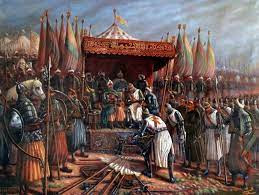
The Crusades, a series of military campaigns launched by Christian Europe in the Middle Ages, have often been a subject of controversy and debate. While many critics argue that the Crusades were nothing more than a brutal and destructive exercise in religious fanaticism, there is a case to be made for understanding these events within a more nuanced historical context. In this article, we will explore some of the reasons to support the Crusades, highlighting the complex truth behind these pivotal events.

The Defense of Christendom

One of the primary arguments in support of the Crusades is the perceived need to protect Christendom, the community of Christian states and peoples. At the time, the Byzantine Empire was under siege by the Seljuk Turks, and Christians in the Holy Land faced persecution and suppression. The call for Crusades was, in part, a response to these threats and a bid to protect and preserve Christian communities and sacred sites in the East.

The Context of the Time

It is crucial to consider the historical context in which the Crusades took place. The Middle Ages were marked by religious fervor and a worldview that intertwined faith and politics. The Crusades should not be viewed solely through the lens of modern secularism but rather in the light of the prevailing beliefs of the time.

Economic and Cultural Exchange

The Crusades, especially the later ones, brought about significant economic and cultural exchanges between the East and the West. The encounter with the Islamic world exposed Europeans to new ideas, knowledge, and goods. This cross-cultural exchange played a vital role in the later development of Renaissance Europe and the growth of trade and commerce.

The Reconquista and the Crusades

One often overlooked aspect of the Crusades is their connection with the Reconquista, the Christian reconquest of the Iberian Peninsula from Muslim rule. The experience gained during the Crusades, particularly in the areas of military strategy and siege warfare, played a crucial role in the eventual success of the Reconquista. This contributed to the unification of Spain under Christian rule and the flourishing of Spanish culture and influence.

Religious Motivation and Faith

While some criticize the Crusades as religious fanaticism, it's essential to acknowledge that the motivation for the Crusaders was deeply rooted in their faith. These men and women believed they were undertaking a holy duty to reclaim lands considered sacred by their religion. Their commitment to their cause, while sometimes leading to tragic events, also exemplifies the power of faith in shaping the course of history.

The Complex Legacy

The Crusades left a complex legacy, but it's a legacy that shaped the course of Western history. The interplay of cultures and ideas, the development of medieval chivalry, and the foundation of knightly orders like the Templars and Hospitallers are all part of the lasting impact of these historical events.


In conclusion, while the Crusades are not without their dark chapters, they should not be condemned outright as a brutal exercise in religious fanaticism. Instead, it is important to consider the Crusades within the context of their time, recognizing the complex factors that motivated the Crusaders and the lasting impact they had on the course of history. A more nuanced understanding of the Crusades is essential to appreciate their historical significance and their role in shaping the world we know today.